
Our Services for Agricultural Research
True academic authority isn’t traded—it’s built. We never offer shortcut signatures; we empower you to master the craft of high-impact research. Through expert mentorship and strategic guidance, we sharpen your analytical skills, refine your article presentation, and clear your path to premier journals.
Don’t just get published. Elevate your research and lead the field.

Academic and Scientific Language Editing
Writing “Academic” or “Research” papers can often be challenging, especially the English language is the weak point. Scientific and Academic writing requires a specific kind of language. Its sometimes hard to master. However, linguistic limitation should not hinder your publication process. Thus, consulting a professional editor from “Krishi Hospital” can help you with your Thesis or Dissertation writing as well as Improve your manuscript and enhance your chances of publication.

Scientific Data Analysis and Presentation
Analyzing and presenting scientific data can be challenging, especially when selecting appropriate statistical methods and converting complex results into clear, meaningful findings. Proper analysis and effective presentation are essential for drawing reliable conclusions and communicating your research effectively. “Krishi Hospital” provides scientific data analysis and presentation support to help you analyze your data, interpret results, and present your findings through clear tables, graphs, and scientific figures for your research paper, thesis, or dissertation.
Experts Overseeing Our Services

Dr. Avishek Datta
Professor
Agricultural Systems and Engineering
AIT, Bangkok

Dr. Mark Tester
Professor
Plant science
KAUST, Saudi Arabia

Dr. Jalal Uddin Ahmed
Professor (Retired)
Department of Crop Botany
GAU, Bangladesh

Dr. Takuji W. Tsusaka
Associate Professor
Natural Resource Management
AIT, Bangkok

Dr. Suriyan Cha-Um
Senior Researcher
BIOTECH/NSTDA
Thailand

Dr. Suleman D. Bello
Assistant Professor
Fisheries and Aquaculture
ASU, Nigeria

Dr. Debesh Das
Professor
Agrotechnology Discipline
KU, Bangladesh

Dr. Toma Deb Nath
Associate Professor
Agricultural Extension Education
BAU, Bangladesh
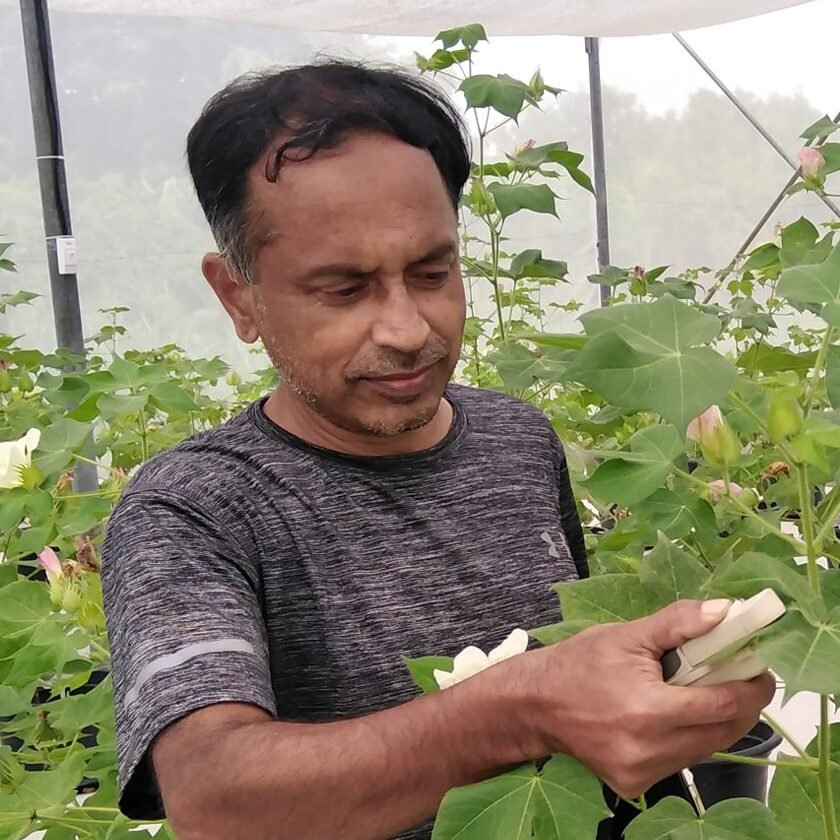
Dr. Khalequzzaman
Senior Scientific Officer
Cotton Development Board
Bangladesh

Dr. Arindam Biswas
Scientific Officer
Bangladesh Agricultural Research Institute
Bangladesh

Dr. Sheikh Faruk Ahmed
Assistant Professor
Department of Crop Botany
GAU, Bangladesh

Dr. Subesh Dhakal
Country Coordinator (Former)
RIMES-Early Warning System
Nepal

Dr. Farhad Zulfiqer
Associate Professor
Natural Resource Economics
SQU, Oman

Dr. Sushil K. Himanshu
Assistant Professor
Agricultural Systems and Engineering
AIT, Bangkok

Dr. Andrii Seleznov
Founder
Petiole Pro
London, United Kingdom
Why Professional Editing Matters
Writing a scientific Thesis, Dissertation, or Article is not only about presenting good scientific findings. The way of writing plays a crucial role for any scientific manuscript. It can often be very challenging to communicate complex scientific ideas clearly, accurately, and professionally. Professional language-editing can help overcome these difficulties. Our editing services are designed to help students and researchers improve the writing and overall presentation of their manuscripts while preserving the authors’ original scientific message.
Agriculture is a complex science and only an Agriculturist can understand and help you better than any general scientific editor.
Your research tells the story. We help you communicate it clearly.
Our academic and scientific language editing services are exclusively for “Agricultural Science”. We offer editing service for —
- Thesis
- Dissertation
- Research articles
- Review articles
- Book chapters
- Technical notes
- Scientific reports
- Academic Assignments
- Research Proposal
- Synopsis
[N: B: Biological science documents closely related to agriculture such as Biochemistry, Botany, Biotechnology, Microbiology are also welcomed. However, please contact us via “WhatsApp” or “Messenger” beforehand. We only take tasks that we are confident on delivering a quality work.]
Our editors go beyond the fundamental requirements of scientific writing to enhance the clarity, readability, consistency, and overall quality of your manuscript. The services listed below are common areas of support but not limited to these tasks. We provide customized editing based on the specific requirements of each manuscript.
———-
1. Improving the clarity of your scientific writing
Scientific writing requires precision. Even a small grammatical or wording problem can change the meaning of a sentence or make an otherwise strong scientific argument difficult to understand.
Our editors examine the manuscript carefully to identify problems involving grammar, sentence construction, terminology, word choice, and logical expression. They can also help transform unnecessarily complicated sentences into clearer and more readable scientific language.
For example:
- “The plants were subjected to treatment and the results were found to be increased significantly.”
- “The treatment significantly increased plant growth.”
The second sentence communicates the same idea more directly and precisely.
A good editor does not simply correct grammar. They also consider whether the intended scientific meaning is being communicated effectively.
———-
2. Reducing common language and formatting errors
Base writeup often contain repeated language problems that can easily be overlooked by the authors themselves. These may include incorrect articles, inappropriate prepositions, inconsistent terminology, punctuation errors, subject–verb disagreement, unnecessary repetition, and inconsistent use of abbreviations.
Technical writing also requires careful attention to units, numbers, hyphenation, capitalization, and scientific terminology.
For example:
- “a 20 day treatment”
- “a 20-day treatment”
In the second example, the hyphen is required because “20-day” functions together as an adjective describing the treatment. Identifying these details throughout a manuscript can make the writing considerably more professional and consistent.
———–
3. Preserving the intended scientific meaning
Academic editing should never change the scientific conclusions of a study. The role of an editor is to make the author’s message clearer. This becomes particularly important when a manuscript contains technical terminology, discipline-specific expressions, or statements that could have multiple interpretations.
An experienced editor can identify unclear expressions and suggest alternative wording while keeping the author’s original meaning intact.
For researchers working in agriculture and related scientific disciplines, familiarity with scientific terminology is especially valuable. Terms related to crop physiology, soil science, plant pathology, biotechnology, environmental stress, agronomy, and other specialized areas need to be used accurately and consistently.
Only an agriculturist can do it the best.
———-
4. Strengthening the overall presentation of the manuscript
Good language can make a scientific paper easier to read, but academic editing can also reveal broader presentation issues.
During manuscript review, you may benefit from identifying and changing:
- unclear or unnecessarily long sentences;
- repetitive statements;
- inconsistent terminology;
- weak transitions between paragraphs;
- ambiguous descriptions of methods or results;
- inappropriate word choices;
- problems with academic tone; and
- inconsistencies in the presentation of scientific information.
Addressing these issues can help create a manuscript that communicates its findings in a more organized and professional manner.
———-
5. Adapting your manuscript to academic publishing standards
Different journals may have different expectations regarding language, terminology, manuscript organization, referencing, units, abbreviations, and presentation.
Before submission, a researcher should carefully examine the journal’s author guidelines and ensure that their manuscript follows the relevant requirements.
Our professional manuscript support can help you identify language and presentation issues that may otherwise be missed during self-editing. However, the author should always remain responsible for checking the journal’s specific instructions and ensuring that the final manuscript meets them.
———-
6. We teach you through the editing process
Academic editing can also be an opportunity to develop stronger writing skills.
One of our task is to make you see the corrections and suggestions relating to sentence structure, word choice, grammar, scientific style, and clarity. We believe it can gradually improve your own future writing. By this way, you won’t need to come to us repeatedly rather help others from what you have learned.
———-
7. Protecting the confidentiality of your research
Unpublished research may contain valuable findings, original ideas, experimental data, and information intended for future publication. We consider confidentiality when selecting any manuscript-support service.
We handle research materials responsibly and maintain appropriate confidentiality throughout the service.
At Krishi Hospital, we understand that a manuscript represents the time, effort, and intellectual contribution of its authors. This is why we treat every document with appropriate care and discretion.
———-
A strong scientific study deserves to be communicated as clearly as possible. Language problems should not prevent readers, reviewers, or editors from understanding the value of a research. Krishi Hospital provides academic writing and manuscript-support services to help researchers improve the language, clarity, consistency, and professional presentation of their scientific papers.
Whether you are preparing your first manuscript or revising a paper for journal submission, appropriate academic support can help you communicate your research more effectively and present your work with greater confidence.
———-
As we always say…. Your research tells the story. We help you communicate it clearly.
Agricultural science requires more than general scientific editing. It demands a clear knowledge and understanding of agriculture. From soil, plant, microbiome to climate interactions, precise scientific communication depends on subject-specific knowledge. Agriculture is a highly specialized and multidisciplinary field, an Agriculturist can better understand the context and scientific intent behind your research. At Krishi Hospital, our specialties are —
- Agriculture-specific expertise: We understand agriculture beyond general scientific writing and editing.
- Subject-matter knowledge: Our expertise covers crop physiology, soil science, plant pathology, biotechnology, agronomy, environmental stress, and related fields.
- Accurate scientific terminology: We ensure that agricultural and scientific terms are used correctly, consistently, and in the appropriate context.
- Better understanding of your research: An Agriculturist can better understand the scientific background, methodology, results, and objectives of agriculture-based research.
- Beyond general editing: We focus not only on language but also on the scientific context and presentation of your agricultural research.
- Agriculture meets scientific communication: Because agriculture is a specialized science, your research deserves an editor who understands agriculture.
Professional Analysis of Agricultural Data
Agricultural research generates complex datasets that require appropriate statistical approaches and scientific interpretation. At Krishi Hospital, we provide professional analysis of agricultural data to help researchers obtain meaningful, reliable, and scientifically sound results. From statistical analysis and interpretation to clear tables, graphs, and publication-ready figures, our experts help transform your research data into understandable scientific evidence. Our services are not limited to the areas listed below and can be tailored to the specific requirements of your research.
Agriculture is a disciplinary science and only an Agriculturist can understand and help you better than any general data analytical services.
Its your data. We help you to present it meaningfully.
Our data analytical services are exclusively for “Agricultural Science”. We offer editing service for —
- Academic data (Thesis or Dissertation)
- Research article data analysis
- Analysis for scientific reports
Data from all agricultural disciplines are welcome. Some examples of analytical services are given below.
- Analysis of variance (ANOVA)
- Mean comparison and separation
- Correlation
- Regression
- Principal component Analysis (PCA)
- MGIDI
- Heatmap
- Normality and Homogeneity
- Cluster analysis
- Genetic diversity
- Polymorphism
- Stress tolerance indices
- and many more……
[N: B: Biological science data closely related to agriculture such as Biochemistry, Botany, Biotechnology, Microbiology are also welcomed. However, please contact us via “WhatsApp” or “Messenger” beforehand. We only take tasks that we are confident on delivering a quality work.]
Our experts go beyond simply running statistical tests. We focus on selecting appropriate analytical approaches, interpreting your results scientifically, and presenting your findings in a clear and meaningful way. The services listed below represent common areas of support and are **not limited to these tasks**. We provide customized analytical support according to the objectives, experimental design, and nature of your agricultural research.
—
1. Choosing the appropriate statistical approach
Selecting the right statistical method is one of the most important steps in scientific data analysis. The choice depends on your research objectives, experimental design, number of factors, type of data, and assumptions associated with each statistical method.
Our experts examine your research design and dataset to help identify appropriate analytical approaches rather than applying statistical tests without considering the scientific context.
—
2. Analysis of experimental agricultural data
Agricultural experiments often involve multiple treatments, varieties or genotypes, environmental conditions, locations, seasons, and other experimental factors. Proper statistical analysis is essential for determining whether observed differences are statistically meaningful.
We can assist with the analysis of data generated from:
- Field experiments
- Pot and greenhouse experiments
- Hydroponic studies
- Laboratory experiments
- Variety and genotype screening
- Fertilizer and nutrient experiments
- Abiotic and biotic stress studies
- Crop growth and yield experiments
- Physiological and biochemical studies
- Soil and plant nutrient studies
—
3. Scientific interpretation of statistical results
Statistical output can contain numerous values, tables, significance levels, and statistical parameters that may be difficult to interpret.
We help researchers understand what their statistical results actually mean from a scientific perspective. This may include interpreting:
- Significance and non-significance
- Treatment effects
- Interaction effects
- Correlations
- Regression relationships
- Variation among treatments or genotypes and
- Important trends and patterns within the dataset.
Our objective is not simply to provide statistical output, but to help connect the statistical findings with the biological or agricultural context of the research.
—
4. Clear and meaningful data visualization
A well-designed figure can communicate a research finding more effectively than a large table of numbers. However, the type of graph and method of presentation should be appropriate for the nature of the data.
We can help prepare and improve:
- Bar graphs
- Line graphs
- Scatter plots
- Scree plots
- Box plots
- Heatmaps
- PCA biplots
- Cluster diagrams
- Correlation plots
- Other scientific visualizations where appropriate.
The aim is to make your findings easier to understand while maintaining scientific accuracy.
—
5. Publication-ready tables and figures
Tables and figures are an important part of scientific communication. Poorly organized tables or unclear figures can make even good research difficult to understand.
We help organize analytical results into clear, consistent, and professionally presented tables and figures suitable for:
- Research manuscripts
- Theses and dissertations
- Scientific reports
- Conference presentations and
- Journal submissions.
—
6. Assistance with presenting statistical results
Knowing how to perform an analysis is only one part of the process. Researchers also need to communicate the results appropriately in their manuscript. We can provide guidance on how statistical findings may be presented within the “Results and Discussion” sections, including the organization of tables and figures, reporting of statistical significance, and scientific explanation of observed patterns.
—
7. We help you understand your analysis
We believe that data analysis should not be a black box where researchers simply receive statistical outputs without understanding them. Our aim is to help researchers understand the analytical process, the meaning of their results, and the appropriate way to communicate their findings. Through this approach, researchers can gradually develop greater confidence in handling and presenting their own data.
—
8. Agriculture-focused data analysis
Agricultural data are often scientifically complex and require an understanding of both statistics and the agricultural context.
Data involving crop growth, yield, physiology, nutrient uptake, soil properties, stress responses, biochemical characteristics, genotypes, and environmental variables should be interpreted with appropriate subject knowledge.
At “Krishi Hospital”, our agriculture-focused expertise allows us to consider the scientific context behind your data rather than treating agricultural datasets as merely numbers in a spreadsheet.
—
9. Customized analytical support
Every research project is different. The appropriate statistical approach for one experiment may not be suitable for another. Therefore, our services are not limited to the analyses listed above. We provide customized support based on your research objectives, experimental design, dataset, and specific analytical requirements.
—
Your data tells the story. We help you reveal it clearly.
Good research generates valuable data, but meaningful scientific conclusions depend on how that data is analyzed, interpreted, and presented. At “Krishi Hospital”, we help researchers transform agricultural data into scientifically meaningful results and communicate those findings with confidence.
Agricultural data requires more than general scientific analysis. It demands a clear knowledge and understanding of agriculture. From soil, plant, microbiome to climate interactions, precise scientific communication depends on subject-specific knowledge. Agriculture is a highly specialized and multidisciplinary field, an Agriculturist can better understand the context and scientific intent behind your research. At Krishi Hospital, our specialties are —
- Agriculture-Focused Expertise: Our agriculture-focused expertise helps us interpret your findings within the appropriate scientific context.
- Research-Specific Analysis: Every experiment has its own objectives, design, and data characteristics. We help identify analytical approaches that are appropriate for your specific research rather than applying the same methods to every dataset.
- Scientifically Meaningful Interpretation: Statistical results are valuable only when they are properly understood. We also help connect your analytical findings beyond the analysis like data interpretation, identifying meaningful patterns, and presenting results in a clear and scientifically appropriate manner.
- Clear and Professional Presentation: We help transform complex datasets into well-organized tables, graphs, charts, and scientific figures that communicate your findings effectively.
- Customized Analytical Support: Our services are not limited to the analyses listed on this page. We tailor our support to your research objectives, experimental design, and specific data-analysis requirements.
- Helping Researchers Understand Their Data: We believe researchers should understand the methods used in their studies and the meaning of their results. Our approach encourages learning, confidence, and better scientific communication.